A roof leak doesn’t always start right above the stain on your ceiling. Water can enter at one spot, run along the decking or rafters, and drip somewhere else. That’s why roof leak repair in Acworth, GA, starts with finding the source. Homes in Acworth and Canton face similar challenges from summer storms, heavy rain and falling pine needles. Whether you’re looking into roof leak repair in Canton, GA, or dealing with a drip in Acworth, the checks below can help you understand what may need attention. If you have a leak now, call Rise Residential Roofing at 678-772-6995 to ask about an inspection.
Common Roof Defects That Cause Leaks
Roof leaks often start at one of these trouble spots:
- Missing or lifted shingles: Strong winds can lift shingles or tear them off, exposing the layers underneath to rain.
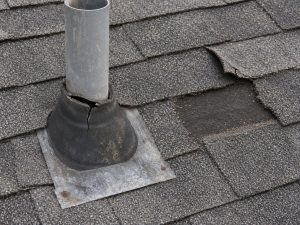
- Cracked pipe boots: The rubber collar around a plumbing vent can deteriorate in the sun. Once it splits, water can run down alongside the pipe.
- Failed flashing: Flashing directs water away from places where the roof meets a chimney, wall or skylight. If it corrodes, bends or pulls loose, water can slip behind it.
- Nail pops: A fastener that backs out can lift the shingle above it and create a path for water.
- Worn valleys: Valleys carry runoff from two roof slopes. Debris, damaged materials or gaps along the edges can interrupt that flow.
- Old sealant: Sealant around vents and skylights can crack or lose adhesion over time.
Many Acworth homes sit under tall pines, so needles can pile up in valleys and behind chimneys. That debris slows drainage and holds moisture against the roof. During a spring storm, runoff can back up at vulnerable edges and flashing.
Repair Methods That Fit Your Roof
The right fix depends on what failed. A missing shingle, a cracked pipe boot and an open metal panel seam call for different repairs.
For localized shingle damage, replacement shingles should be compatible with the existing roof and match as closely as practical. A cracked pipe boot may need replacement, with the new flashing integrated into the surrounding shingles so it sheds water. Failed wall or chimney flashing may need new step flashing or counterflashing, depending on where water is entering. See our roof repair services for more information.
If the wood under the shingles has gone soft, the affected decking needs to be assessed. Damaged sections should be replaced as needed before the roof covering goes back on. Covering rotten wood leaves the new roofing without a sound base.
Metal roofs need a different plan. Leaks can come from loose exposed screws, worn sealing washers or open panel laps. Depending on the system, the repair may involve compatible replacement fasteners, new washers or rebuilding a failed lap. Use sealant only where the panel system calls for it. A bead of sealant won’t correct a damaged panel or loose flashing. See our guide to metal roof leak repair in Canton, GA, for more on these details.
Drainage and Flashing Checks
A leak can start when water backs up at the roof edge or gets directed behind flashing. A leak assessment should consider how water moves across and off the roof, even when the indoor stain appears far from the gutter.
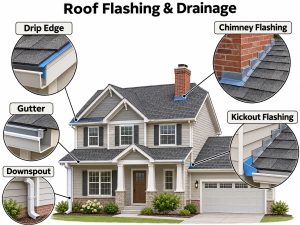
- Gutters: Pine needles and leaves can clog gutters. When water backs up or runs behind the gutter, it can damage the fascia and roof edge. See our gutter repair services if the gutter is sagging or leaking at a joint.
- Downspouts: Check for blockages and make sure water discharges away from the house.
- Drip edge: This metal strip helps direct runoff away from the deck and fascia. Missing or damaged sections can leave wood exposed to repeated wetting.
- Kickout flashing: This piece diverts runoff into the gutter where a sloped roof edge meets a wall. If it is missing or poorly fitted, water can run behind the siding.
- Chimney flashing: Look for gaps, corrosion or loose pieces where the roof meets the chimney.
When a Spot Repair Isn’t Enough
A small repair can work well when the problem is confined to one area and the surrounding roof is sound. A broader inspection makes sense when:
- Shingles are losing granules across much of the roof.
- Leaks are showing up in several places.
- The decking is soft across a large area.
- The roof shows widespread wear or is nearing the end of its service life.
- The same leak has returned after more than one repair.
New shingles can look different from older, faded ones. If you’re weighing a patch against a larger repair or replacement, ask for photos and an explanation of what the inspection found. That makes it easier to compare the scope and cost of each option.
How to Check the Finished Work
A repair should be checked against the work it was meant to accomplish. For a shingle or flashing repair, that means checking how the new pieces overlap, whether they’re secure and whether water can drain away from the repaired area. An accessible attic or ceiling area can also be checked for fresh moisture.
If the entry point is still unclear, a roofing professional may use a controlled water test when conditions are suitable. Testing one area at a time helps narrow down where water is getting in. A dry result under test conditions doesn’t rule out a leak that only occurs during wind-driven rain.
Before-and-after photos can document what was repaired, especially where finished shingles cover the work. Confirm what documentation, cleanup and follow-up are included in the repair scope. After the next substantial rain, look for fresh staining or drips from a safe location inside. If the leak returns, contact the contractor who performed the repair.
Contact Rise Residential Roofing About an Acworth Roof Leak
If you see a stain, a drip or a missing shingle, note when you first noticed it and whether it appears during steady rain or only during heavy storms. That information can help narrow down where to look. For roof leak repair in Acworth, GA, call Rise Residential Roofing at 678-772-6995 or contact us online to discuss the problem and ask about an inspection.
Frequently Asked Questions
How do I know if my roof is leaking?
Look for water stains on the ceiling, peeling paint, damp insulation or a musty smell in the attic. Missing shingles after a storm are also a warning sign. A stain or odor alone doesn’t prove the roof is the source, so an inspection can help trace the moisture.
Can a roof leak be repaired without replacing the whole roof?
Yes. If the problem is limited to one area, such as worn flashing or a cracked pipe boot, and the surrounding roof is sound, a spot repair may be enough.
How long does a roof leak repair take?
A simple repair may take a few hours. Work involving damaged decking or chimney flashing can take longer. Ask for a timeframe once the source of the leak and the repair scope are known.
Is it safe to wait to fix a small leak?
Have it checked promptly. Even a small leak can wet insulation and damage wood over time. Early assessment helps you find the cause before the damage spreads.
How can I tell whether the leak is fixed?
Check the repair details and look for fresh moisture in accessible interior areas. A professional may use a controlled water test where appropriate. Checking the affected area again after substantial rain can help show whether the leak persists.
Can leaks on metal roofs be repaired?
Yes. Loose fasteners, worn washers and open seams can often be repaired when the surrounding panels are sound. The method depends on the panel system and the cause of the leak. Call Rise Residential Roofing to discuss your roof type and service availability.