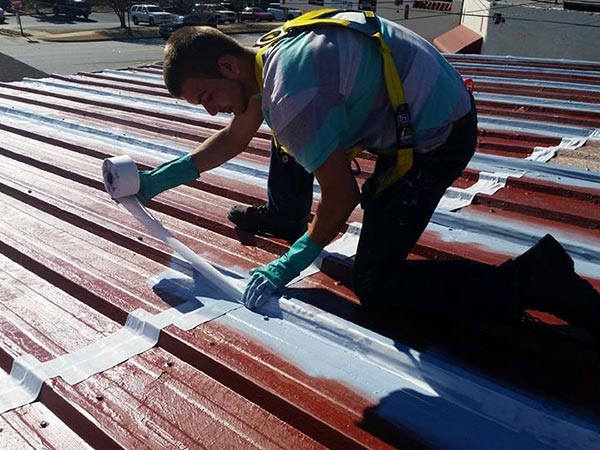
Homeowners in Canton, GA, often choose metal roofing because of its durability and long service life. However, even a well-installed metal roof can develop leaks over time due to weather exposure, natural expansion and contraction, or aging components. Unlike leaks on asphalt shingle roofs, leaks on metal roofing systems are often more difficult to locate because water can travel beneath the panels before it becomes visible inside the home. Metal roof leak repair focuses on identifying the true source of the leak and restoring the roof’s weather-tight performance.
Call Rise Residential Roofing at (678) 772-6995 for metal roof leak repair in Canton, GA.
Metal Roof Leak Repair vs. Shingle Repairs
Finding the source of a leak on a metal roof is rarely straightforward. With asphalt shingles, water often enters the roofing system relatively close to where interior stains appear. Metal roofing systems behave differently because their interlocking panels allow water to travel beneath the surface before it reaches the roof deck or attic.
This means a ceiling stain may appear several feet away from the actual leak. As rainwater follows panel ribs, fastener openings, or the underlayment, it can move downhill or sideways before entering the home’s interior. Because of this hidden movement, identifying the true point of water intrusion requires a detailed roof inspection rather than simply repairing the area directly above the visible damage.
Another factor is the way metal expands and contracts throughout the year. Temperature changes cause roofing panels to expand and contract slightly. Although this movement is expected, years of expansion and contraction can gradually loosen fasteners, stress flashing components, and place additional pressure on panel seams. Over time, these small changes can create leak pathways that are difficult to detect without closely examining the entire roofing system.
Common Sources of Metal Roof Leaks
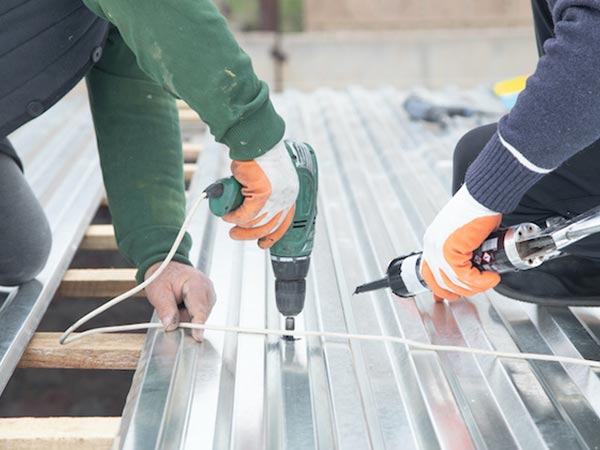
Several roofing components can become more susceptible to leaks as a metal roof ages. One of the most common problem areas is exposed fasteners. On roofing systems that use exposed screws, each fastener includes a rubber washer that creates a watertight seal. Over time, weather exposure can cause these washers to deteriorate, while repeated thermal movement can cause fasteners to slowly back out of the roof panel. Even a slight gap around a fastener may allow water to penetrate beneath the roofing system.
Panel seams are another frequent source of leaks. Some metal roofs use long continuous panels, while others rely on horizontal seams where panel lengths meet. Repeated thermal movement can gradually weaken these connections, creating small openings that admit wind-driven rain during severe weather.
Flashing also deserves close attention. Areas around chimneys, skylights, plumbing vents, roof-to-wall transitions, and other penetrations depend on flashing to redirect water away from vulnerable openings. As flashing materials age or shift, they can separate from adjoining roofing components, creating opportunities for moisture intrusion.
Ridge caps at the peak of the roof can also develop problems if fasteners loosen or sealants deteriorate. Because ridge caps protect one of the roof’s highest transition points, maintaining their weather-tight seal is an important part of preventing leaks.
What Happens When a Metal Roof Leak Goes Unaddressed
Even a minor leak can create significant problems if it is not repaired promptly. Water that enters beneath the metal panels may saturate the underlayment, reducing its ability to provide secondary protection against moisture. As the leak continues, water can reach the roof decking, causing the wood to weaken or deteriorate over time.
Inside the home, ongoing moisture intrusion can stain ceilings, damage insulation, and affect drywall, paint, and flooring. If the area remains damp for an extended period, conditions may also become favorable for mold and mildew growth. Because water from metal roof leaks can travel before becoming visible, the amount of hidden damage can be much greater than homeowners initially expect.
Addressing leaks early helps limit water intrusion and prevent damage from spreading beyond the roofing system. A prompt repair is typically less invasive and less expensive than restoring structural components that have been exposed to moisture for an extended period.
Protect Your Home with Prompt Metal Roof Leak Repair
Metal roofs are built for longevity, but no roofing system is immune to the effects of wear and weather. Because water can travel beneath metal panels before a leak becomes visible, a professional inspection and source-focused repairs are essential for protecting the roof and the home beneath it. Addressing leaks promptly helps preserve the roof’s performance, minimizes interior damage, and extends the life of the roofing system.
For metal roof leak repair in Canton, GA, contact Rise Residential Roofing at (678) 772-6995 today.
FAQ
Why is it so difficult to find where a metal roof is actually leaking?
Water often travels beneath metal roof panels before entering the home, so the visible ceiling stain may be several feet away from the actual leak. A professional inspection is usually needed to trace the water intrusion back to its source.
Can a metal roof leak be repaired without replacing the entire roof panel?
Yes. Many leaks are caused by issues such as loose fasteners, deteriorated flashing, separated seams, or worn sealing washers. These problems can often be repaired without replacing full roof panels, provided the surrounding roofing materials remain in good condition.
How long does a metal roof leak repair typically last?
A properly performed repair that addresses the true source of the leak rather than simply sealing the visible symptom can provide long-lasting protection. The lifespan of the repair depends on the roof’s overall condition, the repair method used, and ongoing maintenance.