A standing seam metal roof can last for decades, but the metal is only part of what gets it there. How the panels lock together, how they’re held down, what sits underneath and how the roof handles heat all affect how well it performs over time.
This guide explains each part in simple terms. It helps whether you’re pricing a standing seam metal roof in Alpharetta, GA, or comparing options for a standing seam metal roof in Canton, GA. Have a question about your roof? Call Rise Residential Roofing at 678-772-6995.
What Is a Standing Seam Metal Roof?
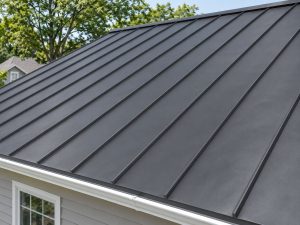
A standing seam roof is made of long metal panels that usually run from the ridge down to the roof edge. Where two panels meet, their edges rise above the flat part of the panel and lock together. That raised joint is the “standing seam.” It sits above the main path of runoff, which flows down the flat part of the panel.
Residential panels are available in steel and aluminum. Steel panels may have a corrosion-resistant metallic coating beneath the paint. Factory finishes, including PVDF coatings, can help the color hold up in the Georgia sun. Panel thickness, seam height and finish options vary by product.
How the Panel System Works
Snap-Lock Panels
Snap-lock panels click together without a separate field seaming step. That can simplify installation. They’re often used on steeper residential roofs, but the minimum slope depends on the panel system.
Mechanically Seamed Panels
With these panels, a seaming tool folds the edges together to form a single-lock or double-lock seam. The extra seaming step can add labor. Some mechanically seamed systems are designed for lower slopes, but suitability for low slopes and strong winds depends on the tested roof assembly. Check the manufacturer’s specifications for the exact panel profile.
Concealed vs. Exposed Fasteners
In a clip-fastened standing seam system, screws secure the clips to the roof deck or framing, and the panels lock over them. The fasteners that hold the main field of panels down stay beneath the metal, reducing the number of exposed screw penetrations. Trim and flashing may still use visible fasteners, depending on the design.
Exposed fastener roofs, often called screw-down roofs, use fasteners through the face of the panels. A sealing washer helps keep water out around each screw. These systems typically cost less up front, but the exposed screws and washers need regular attention as they age.
| Feature | Concealed Fastener | Exposed Fastener |
|---|---|---|
| Screws visible? | Panel fasteners are hidden; some trim fasteners may be visible. | Yes, across the panel surface. |
| Upfront cost | Typically higher. | Typically lower. |
| Upkeep | Routine checks of seams, trim and flashing. | Routine checks, including exposed screws and sealing washers. |
| Potential leak points | Fewer exposed fastener penetrations in the panel field. | Loose screws and worn washers can let water in. |
| Service life | Depends on the panel, finish, installation and upkeep. | Also depends on the condition and upkeep of exposed fasteners and washers. |
If reducing exposed fastener maintenance is a priority, a concealed fastener system is worth comparing.
How the Panels Attach
On a clip-fastened standing seam roof, the attachment needs to hold the panels in place while allowing for expansion and contraction. A fixed point anchors the panel at a designated location. Floating, or sliding, clips can let the panel move lengthwise as its temperature changes.
The panel manufacturer’s installation instructions specify how the fixed point and clips are arranged. Clip spacing depends on the assembly and the roof’s design wind loads. Edges and corners can face higher wind loads than the center of the roof, so the attachment layout may vary across the same building.
Underlayment: The Layer You Don’t See
Underlayment goes on the deck beneath the metal. It provides a second layer of protection if water gets past the panels.
Metal panels can get hot in direct sun, so the underlayment needs to suit the roof assembly and its expected temperatures. Some systems specify a high-temperature synthetic underlayment or a compatible self-adhered membrane at valleys, eaves and openings. Check the panel maker’s instructions and written warranty for approved materials.
Flashing: Where Leaks Often Start
Flashing and trim direct water away from edges, joints and openings. On a standing seam roof, important details include:
- Ridges and hips
- Valleys
- Eaves and rakes, the bottom and side edges of the roof
- Walls, chimneys and skylights
- Pipe vents
Flashing needs to shed water and accommodate panel movement where the system calls for it. When you compare quotes for metal roof installation in Canton, GA, or in Alpharetta, ask how the contractor will fit the trim at walls, valleys and openings. Whether the pieces are custom bent or supplied with the system, what matters is that they fit the roof and work with the panels.
Thermal Movement: Why Metal Needs Room to Move
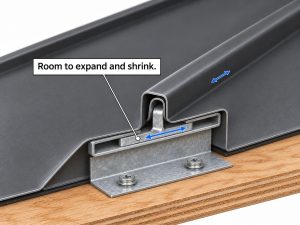 Metal expands when it gets hot and contracts when it cools. In North Georgia, a dark metal roof in summer sun can get much hotter than the surrounding air. Longer panels move more over the same temperature change, and aluminum generally expands more than steel. If a panel can’t move as designed, it can stress the clips, seams or trim.
Movement and restraint can also contribute to oil canning, the visible waviness in the flat part of a panel. Other causes include stresses in the metal, uneven decking and handling during installation.
Sliding clips and trim details can accommodate movement away from the fixed point. The manufacturer’s instructions should identify:
- The maximum panel length for the specified assembly
- How much movement the clips can accommodate
- Where the fixed point belongs
When a roof run exceeds the system’s panel limits, the design may need an approved step joint, expansion detail or different panel layout. Check the installation instructions and written warranty for any related requirements.
Is a Standing Seam Metal Roof Right for Your Alpharetta Home?
A standing seam metal roof typically costs more up front than asphalt shingles. In return, it can offer a longer service life and fewer exposed fasteners to maintain. Storm performance depends on the roof assembly and installation. A reflective finish can also reduce how much solar heat the roof absorbs, though the effect on cooling bills depends on the rest of the home.
If you plan to stay in your home, compare the initial cost with the upkeep and service life you expect. Review the proposed panel system, attachment, underlayment, flashing and warranty together. Learn more about our metal roofing services, see our past projects, or call Rise Residential Roofing at 678-772-6995 to discuss your Alpharetta project and ask about an inspection and quote. You can also contact us online.
Frequently Asked Questions
How long does a standing seam metal roof last in Georgia?
A well-installed standing seam roof can last for decades. The metal, finish, installation, exposure and maintenance all affect how long it lasts. Compare the expected service life with the written warranty, since they cover different things.
Is a standing seam roof noisy when it rains?
Rain noise depends on the entire roof assembly. Solid decking, underlayment, attic insulation and the ceiling all affect how much sound reaches the rooms below.
Can a standing seam metal roof go over my old shingles?
Sometimes, depending on the condition of the existing roof and the requirements for the proposed assembly. A full tear-off exposes the deck so hidden damage can be found and repaired before new roofing goes on.
What is oil canning?
Oil canning is visible waviness in the flat part of a metal panel. It’s generally an appearance issue and doesn’t by itself indicate a leak. A flat deck, suitable attachment and panels with shallow ribs called striations can help reduce how visible it is.
Are exposed fastener roofs a bad choice?
No. They can be a practical option when the panel system suits the building and the budget. Their exposed screws and washers need regular checks and replacement when worn or damaged.
What can void a metal roof warranty?
Warranty terms vary. Using unapproved materials, installing clips incorrectly or exceeding panel limits can affect coverage. Some warranties also specify installer qualifications. Ask for the terms in writing before work starts.
Does a metal roof help with energy bills?
It can. A reflective finish can reduce the heat a roof absorbs in summer. The effect on energy bills also depends on attic insulation, ventilation, air sealing and the home’s cooling needs.