If your metal roof in Alpharetta, GA, is leaking, the problem is often at a seam, a screw, an overlap, or a piece of flashing. Water can also run under the metal and show up several feet from where it got in, which makes leaks hard to trace.
This guide explains how metal roof leaks are traced, how repairs match the roof system, and what to check once the work is done. If you see stains or drips, call Rise Residential Roofing at 678-772-6995 to discuss metal roof repair in Alpharetta, GA.
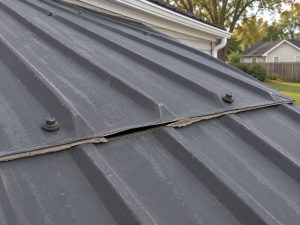
Signs You Have a Seam or Panel Leak
You don’t need to climb on the roof to spot trouble. From inside your home and from the ground, look for:
- Brown stains or bubbling paint on ceilings
- Wet insulation or dark spots on attic wood, if visible from a safe location
- Rust streaks running down from screws or seams
- Screws that look raised or missing
- Panel edges that look lifted or wavy
Take photos of what you can see safely and note where the stain is. Then let a roofer take it from there. Metal roofs can be slippery, and stepping in the wrong place can damage the panels.
Common Defects on Metal Roofs
Summer heat, afternoon storms, and debris from tall oaks and pines can all contribute to roof wear in Alpharetta. Here are common problems to look for:
- Loose or backed-out screws: Repeated expansion and contraction can stress exposed fasteners and their seals.
- Cracked screw washers: Sealing washers can deteriorate with age and exposure, letting water in around fasteners.
- Failed seams and laps: Sealant at panel overlaps can crack or lose adhesion over time.
- Open standing seams: Raised seams can separate, and damaged clips can affect how securely the panels are held.
- Lifted panel edges: Strong wind can loosen vulnerable edges near eaves and ridges.
- Rust spots and small holes: Corrosion can start at scratches, unprotected cut edges, or places where wet leaves collect.
How to Find the Source of a Metal Roof Leak
Finding the source comes first. Sealing the wrong spot leaves the original opening in place.
Where the attic is safely accessible, water stains along rafters or decking can help trace the leak. On the roof, the inspection should focus on likely entry points such as fasteners, panel laps, seams, and flashing. The roof system and site conditions determine how those areas can be accessed safely.
If the source is still unclear, a roofing professional may use a controlled water test when conditions allow. Testing small areas separately helps narrow down the entry point. Leave rooftop testing to a professional: wet metal is slippery, and water sprayed in the wrong direction can create a misleading result.
The same principle applies to metal roof leak repair in Canton, GA: find where water gets in before deciding what to seal or replace.
Drainage and Flashing Checks
A leak isn’t always a hole in a panel. Water can back up at the roof edge or be directed into a weak seam or flashing detail. A leak assessment should consider how water moves off the roof.
- Gutters and downspouts: Fall leaves and pine needles can clog gutters in Alpharetta. Check for debris, poor pitch, and backups that can send water behind the gutter or into the fascia.
- Valleys: Valleys carry runoff from adjoining roof slopes. Debris, gaps in the valley metal, and damaged details along the edges can interrupt that flow.
- Low-slope areas: Dirt lines or corrosion marks can point to slow drainage or standing water.
- Flashing: Check around chimneys, skylights, vent pipes, and roof-to-wall transitions for bent metal, loose fasteners, deteriorated sealant, or cracked pipe boots.
- Ridge caps and closures: Damaged or missing closures can let wind-driven rain in beneath the ridge cap.
How Seam and Panel Leaks Get Fixed
Each fix has to match the roof system and the metal. Common roof repair methods include:
- Screws: Worn exposed fasteners can be replaced with compatible fasteners and sealing washers. An enlarged hole needs a repair suited to the panel and the material beneath it. A new washer should sit evenly without being crushed.
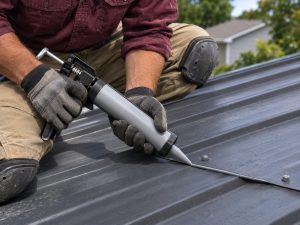
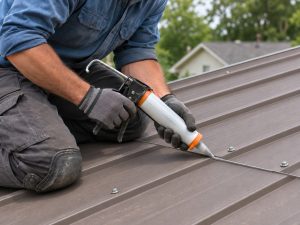
- Seams and laps: Failed sealant is removed where needed, and the metal is prepared for a compatible sealant or butyl tape specified for the detail.
- Standing seams: An open seam may need to be re-seamed using tools and procedures suited to the panel profile. Damaged clips or panels may require more extensive work.
- Flashing: Loose flashing can sometimes be secured again. Bent or deteriorated pieces may need replacement, with transitions rebuilt so they shed water.
- Rust and holes: Localized corrosion can sometimes be treated and small holes patched with compatible materials. Heavily corroded or damaged panels may need replacement.
Fasteners, patches, and flashing must be compatible with the existing metal. Some dissimilar metals can corrode faster when they touch in the presence of moisture. See our metal roofing page for more about metal roof systems.
When a Small Repair Isn’t Enough
A spot repair can work well when damage is limited and the surrounding roof is sound. You may need a more extensive repair or replacement if:
- There are leaks in several places
- Rust has spread across many panels
- The wood under the roof is soft or rotted
- The roof has widespread fastener or flashing problems
- The same leak keeps coming back
Photos and a written explanation of the findings can help you compare a spot repair, panel replacement, and broader roof work.
How to Check Completed Work
Final checks should match the work performed. Depending on the repair, they may include:
- Looking over repaired seams, laps, flashing, and nearby areas for gaps or loose edges
- Checking that replacement fasteners are secure and washers are seated correctly
- Using a controlled water test when appropriate
- Checking accessible interior areas for signs of fresh leakage
- Documenting the work with before-and-after photos
- Removing old fasteners, metal scraps, and other repair debris
Confirm what checks, documentation, and follow-up are included when arranging the work. After the next heavy rain, look for fresh staining or drips in the affected area from a safe location. If the leak returns, contact the contractor who performed the repair.
Keep Your Metal Roof Leak-Free
- Schedule an inspection once a year and after major storms.
- Keep gutters and valleys clear, especially in the fall.
- Arrange to trim branches that hang over the roof.
- Have loose fasteners or worn washers addressed before they leak.
Metal Roof Repair in Alpharetta and Canton
On properties with mature trees in Alpharetta, pay particular attention to debris in gutters and valleys. If you’re looking for metal roof repair in Canton, GA, start with the same questions: Where is water entering? Is the damage limited to one area? What repair fits the panel system? Contact Rise Residential Roofing to discuss your location and project.
Get Leak Repairs in Alpharetta Done Right
A leaking seam or panel won’t fix itself. The longer water gets in, the more damage it can do to your attic, insulation, and roof deck. For metal roof repair in Alpharetta, call Rise Residential Roofing at 678-772-6995 or contact us online to discuss the leak and ask about an inspection.
Frequently Asked Questions
Why does my metal roof only leak during heavy storms?
Strong wind and heavy rain can push water into gaps that light rain doesn’t reach. A worn seam, lifted edge, loose flashing, or overflowing drainage may be involved.
Can I use regular caulk on a metal roof seam?
Use a sealant or butyl tape specified for the roof system and seam detail. Household caulk may not bond properly or tolerate the movement and outdoor exposure of metal panels.
Is it safe to do a hose test on my own metal roof?
Leave rooftop water testing to a roofing professional. Wet metal is slippery, and spraying water in the wrong direction can force it into places rain would not normally reach.
How can you tell whether a roof leak is fixed?
Inspect the repaired area and check for fresh moisture inside where accessible. A controlled water test can help when suitable, and a check after the next heavy rain can reveal whether the leak persists. Confirm what testing and photos are included before work starts.
How long does a seam repair last?
It depends on the panel condition, surface preparation, repair materials, and movement at the seam. Regular inspections help catch renewed wear or separation early.
Do you offer metal roof repair in Alpharetta, GA?
Call Rise Residential Roofing at 678-772-6995 to discuss service availability for your Alpharetta property and the type of metal roof you have.
Should I repair or replace my leaking metal roof?
If the leak is limited to one area and the surrounding panels and decking are sound, a repair may be enough. Widespread rust, repeated leaks, or damaged decking can call for panel replacement or more extensive work. An inspection helps determine the right scope.