
Gutters have one simple job. They catch rain from your roof and carry it away from your house. When gutters are too small, hung at the wrong angle, or empty right next to your foundation, they fail at that job, and the damage adds up fast.
Summer storms in Acworth can drop a lot of water in a short time. That’s why the way your gutters are installed matters just as much as the gutters themselves. In this guide, we explain what a good install looks like for homes in Acworth. The same planning principles apply to gutter installation in Canton, GA, and other communities across Cherokee and Cobb counties.
Have questions about your gutters right now? Call Rise Residential Roofing at 678-772-6995.

Why Gutter Installation Matters for Acworth Homes
Many homes in Acworth have sloped shingle roofs and sit on clay-rich soil. Clay does not absorb water quickly. When rain pours off the roof and lands next to the house, it can pool. Over time, poorly managed runoff can contribute to foundation problems, flood your crawl space, wash out your flower beds, and damage fascia boards.
A well-planned gutter system helps reduce these risks. Here are the five things that make it work.
1. Picking the Right Gutter Size
Gutters come in different widths. Two common sizes for homes are:
- 5-inch K-style gutters: A common option for residential roofs with moderate drainage requirements.
- 6-inch K-style gutters: A larger option that may suit large roofs, steep roofs, or areas where two slopes concentrate water into one spot.
Size depends on how big your roof is, how steep it is, and how hard the rain falls in your area. The number of stories alone does not determine the right size. Gutter and downspout capacity should be considered together.
A gutter that is too small can overflow during a heavy storm, even if it’s brand new. Large, complex, or commercial roofs need sizing calculations based on roof area, layout, and local rainfall.
2. Getting the Slope Right
Gutters need a slight tilt so water flows toward the downspout. The slope should follow the gutter manufacturer’s guidance and the drainage plan for the house.
Too little slope can leave standing water, which encourages debris buildup and mosquito breeding. Excessive slope can make the gutter look crooked or interfere with its position along the roof edge. Long runs may need to slope from the middle toward downspouts at both ends, depending on the system’s capacity and layout.
3. How Gutters Attach to Your Home
Gutters full of water are heavy. They need strong support. Hidden hangers are a common attachment method, but hanger spacing and fasteners should match the gutter manufacturer’s requirements and the supporting structure.
Old-style spikes and ferrules can pull loose over time. Properly installed screw-fastened hangers provide secure support. Before new gutters are hung, the fascia boards and attachment points should be checked. If the wood is soft or rotted, it needs to be repaired first. New gutters on damaged wood won’t stay secure for long.
This is also a good time to think about keeping debris out. Leaves and pine needles are a common problem in North Georgia. Homeowners considering a gutter guard in Canton, GA, or nearby areas should compare products for the debris around their homes. Guards can reduce buildup, but they do not eliminate inspections or cleaning.
4. Downspouts and Outlets: Where the Water Leaves
The outlet is the hole in the gutter where water drops into the downspout. If there aren’t enough outlets, or they’re in the wrong spot, water backs up and spills over.
A drainage plan should account for:
- Enough downspouts to handle the roof area draining into each gutter run
- Downspout and outlet sizes matched to the expected water flow
- Outlets placed at the low end of each gutter slope
- Downspouts placed where water can drain away safely, rather than across a walkway or driveway that could ice up in winter
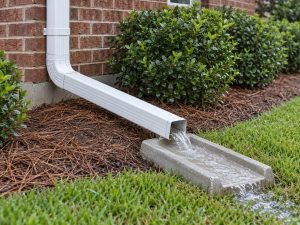
5. Drainage Routing: Moving Water Away From Your Foundation
A gutter system isn’t done when the downspout reaches the ground. The water still has to go somewhere. On clay-rich soil, discharge needs to reach a location where water drains away rather than pooling beside the foundation.
Common options include:
- Downspout extensions: Carry water farther from the house.
- Splash blocks: Help direct discharge and reduce erosion at the outlet.
- Underground drain lines: Carry water to a suitable discharge point, such as a properly located pop-up emitter, where site conditions and local requirements allow.
The right option depends on the yard’s slope, soil, property boundaries, and available drainage routes. Discharge should not create problems for neighboring properties or public walkways.
Signs You Need New Gutters
- Water spills over the edge during rain.
- Gutters pull away from the house or sag.
- You see rust, cracks, or leaking seams.
- Paint is peeling or wood is rotting near the roofline.
- Water pools or erodes soil near your foundation.
If you spot any of these, it’s time for an inspection. Some problems need cleaning or repair rather than full replacement.
Installation and Repair vs. Gutter Cleaning
It helps to know what’s included before you book work. Gutter installation and repair projects can involve:
- New gutter installation
- Full gutter replacement
- Repairs for leaks, sagging, loose hangers, and damaged seams
- Correcting slope and downspout problems
- Gutter guard installation
Routine gutter cleaning is a separate maintenance task. Scooping out leaves and flushing downspouts may not be included in an installation or repair quote. Confirm the available services and the written scope with the contractor before booking.
If clogs keep coming back, gutter guards may help reduce debris buildup. The system will still need periodic checks and cleaning.
Why Acworth Homeowners Choose Rise Residential Roofing
Gutters are part of your home’s roof drainage system. Proper sizing, secure attachment, and a suitable discharge route all matter. If you’re planning gutter installation in Acworth, GA, call Rise Residential Roofing at 678-772-6995 to discuss your project and request an estimate.
Frequently Asked Questions
1. How much does gutter installation cost in Acworth, GA?
Cost depends on the size of your home, the gutter size, the material, and the number of downspouts. Fascia repairs and drainage extensions can also affect the price. Request a written quote that lists the work and materials included.
2. Are seamless gutters better than sectional gutters?
Seamless gutters have fewer joints along their straight runs, which reduces potential leak points. They still have joints at corners, outlets, and end caps, so installation quality and maintenance remain important.
3. What size gutters do I need for my home?
Five-inch and 6-inch K-style gutters are common residential options. The right size depends on roof area, slope, rainfall, and the capacity and placement of the outlets and downspouts. A two-story home does not automatically need a particular gutter size.
4. How long does gutter installation take?
A straightforward installation may take a day. Larger homes, difficult access, fascia repairs, or added drainage work can take longer. Ask for a project-specific schedule before work begins.
5. Do you clean gutters?
Contact Rise Residential Roofing to confirm current service availability. Routine cleaning is separate from installation and repair, so confirm whether debris removal and downspout flushing are included in the quoted work.
6. How long do new gutters last?
Aluminum gutters can provide many years of service. Their lifespan depends on material quality, installation, weather exposure, and maintenance. Proper slope, secure hangers, and keeping gutters and outlets clear help them perform well.