

Choosing between 5-inch and 6-inch seamless gutters should start with the way water reaches and leaves the system, not with size alone. For a Canton, GA home, roof area, roof geometry, runoff concentration, downspout capacity, fascia condition, discharge routing, and the cause of any existing overflow all affect the right next step.
Rise Residential Roofing provides residential gutter services in Canton. Homeowners can review its gutter installation guidance for Canton or call (678) 772-6995 to discuss the property and the drainage problems they have observed.
Seamless Gutters in Canton, GA: 5-Inch vs 6-Inch
A 6-inch gutter has more cross-sectional capacity than a comparable 5-inch profile, but that does not make it the automatic choice for every home. The complete drainage system matters. A larger gutter can still overflow if downspouts are restricted, outlets are poorly placed, debris blocks flow, or roof valleys concentrate more runoff into one section than the system can discharge.
Roof area and geometry are part of professional sizing. Larger drainage areas collect more water, while valleys and intersecting roof sections can concentrate runoff at particular points. Roof pitch can also affect how quickly water reaches the gutter during a storm. The contractor should account for those conditions together with the selected gutter profile, downspout arrangement, and design rainfall assumptions used for the property.
Is Overflow a Cleaning, Repair, or Sizing Problem?
Overflow does not automatically prove that a 5-inch system is undersized. The cause should be identified before the homeowner pays for a larger replacement.
- Cleaning may be the next step when leaves, roof debris, or a blocked outlet are restricting an otherwise serviceable system.
- Localized repair may fit when a limited section is sagging, an end cap or corner is leaking, a hanger is loose, or a downspout connection needs correction.
- Replacement or resizing may deserve consideration when the system is clean and structurally serviceable but documented runoff repeatedly exceeds its practical capacity, or when deterioration is widespread enough that isolated repairs no longer address the overall condition.
Rise Residential Roofing’s Canton gutter repair guidance provides additional examples of problems that may be repairable before a full replacement is considered.
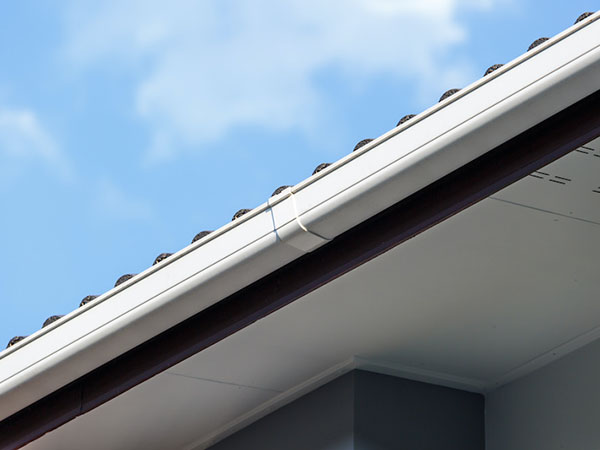
Drainage and Scope Checklist for a Resize or Upgrade
Moving from one gutter size to another should include the supporting drainage details, not only the profile installed along the roof edge.
| What Gets Checked | What the Scope Should Address |
|---|---|
| Joints and transitions | Seamless runs reduce field joints, but corners, end caps, outlets, and transitions still need compatible sealing and detailing. |
| Supports and attachment | Hanger type, spacing, and attachment should suit the selected gutter profile, fascia condition, and expected service loads. |
| Downspouts and outlets | The number, size, and placement of outlets and downspouts should support the amount of water the gutter is expected to carry. |
| Fascia condition | Soft, deteriorated, or unsuitable fascia should be addressed before the new gutter is relied on to stay securely attached. |
| Discharge routing | Each downspout should discharge to an appropriate location instead of moving roof runoff to another problem area near the home. |
| Maintenance access | The finished design should allow practical inspection and cleaning because a larger gutter does not eliminate debris or maintenance needs. |
Downspouts Matter as Much as Gutter Size
Upsizing the gutter without checking the outlets and downspouts can leave the original restriction in place. The contractor should explain how many downspouts are planned, where they will be located, and whether the selected outlet and downspout arrangement can move water away as quickly as the gutter receives it.
Gutter guards can also affect real-world flow and maintenance. They may reduce some debris entry, but they do not make a gutter system maintenance-free and some designs can behave differently during intense rainfall. Rise’s Canton gutter guard guide discusses those tradeoffs.
Closeout Flow Checks After Installation
After installation, the contractor should review gutter slope, outlets, joints, end caps, hangers, downspout connections, and discharge locations. A controlled water test can help identify obvious leaks or flow problems when site conditions allow. The homeowner should also know what to watch during the next substantial rainfall, because real storm flow can reveal concentrated runoff that a limited test does not reproduce.
If water still overtops one section after the system is clean and properly installed, the next step is to determine whether the issue is local concentration, outlet capacity, downspout routing, or overall gutter sizing. That diagnosis is more useful than assuming the entire home needs a larger profile.
Choosing the Right Seamless Gutter Size
Five-inch and 6-inch seamless gutters can both be appropriate depending on the home. A useful proposal should state the selected size, the conditions used to choose it, the downspout plan, any fascia or repair work, discharge routing, and the closeout checks included with installation.
Seamless Gutters in Canton, GA
Rise Residential Roofing installs residential gutters for homes in Canton and its North Georgia service area. For a seamless gutter evaluation, call (678) 772-6995 and ask how the proposed system accounts for roof runoff, outlets, downspouts, fascia, and discharge routing.
Frequently Asked Questions
What is the main difference between 5-inch and 6-inch gutters?
A 6-inch profile provides more capacity than a comparable 5-inch profile, but the right choice also depends on roof geometry, outlets, downspouts, runoff concentration, and the complete drainage design.
Does gutter overflow always mean I need larger gutters?
No. Overflow can also come from debris, poor slope, restricted outlets, damaged supports, or undersized or poorly placed downspouts, so the cause should be identified before resizing.
Should downspouts be reviewed when gutters are upsized?
Yes. The outlet and downspout plan must be able to move the water the gutter collects, or a larger gutter may not solve the original drainage problem.
What should be checked when new seamless gutters are finished?
Check the agreed slope, attachment, joints and end caps, outlets, downspout connections, discharge locations, and any water-flow test or follow-up observations included in the scope.