A roof inspection should help you understand what shape your roof is in, what needs attention now, and what can wait. It should also make clear which areas were inspected and which questions still need answers.
Whether you’re planning a roof inspection in Woodstock, GA, or comparing what’s included in a roof inspection in Canton, GA, this guide explains what a visual inspection can find, what a useful report looks like, and when extra testing or access may help. To ask about an inspection for your home, call Rise Residential Roofing at 678-772-6995.
What a Roof Inspection Covers
A roof inspection looks at the roof and related areas that can be safely accessed within the agreed scope. Common areas include:
- Roof surface: Shingles, metal panels, or other roof coverings.
- Flashing: The pieces that direct water away from chimneys, walls, skylights, and other transitions.
- Pipe boots and vents: The seals around pipes and roof vents.
- Roof edges and drip edge: The details that direct runoff away from the roof deck and fascia.
- Gutters and downspouts: Visible clogs, sagging sections, and loose components.
- Attic: Visible signs of moisture, past leaks, or blocked ventilation where access is available and included.
- Interior ceilings: Stains or other signs of moisture in accessible areas included in the inspection.
Roof slope, condition, and weather affect how closely an area can be inspected. If part of the roof can’t be safely accessed, it may be viewed from the ground or another suitable location. The findings should identify any areas that could not be checked closely.
Common Problems a Visual Inspection Can Find
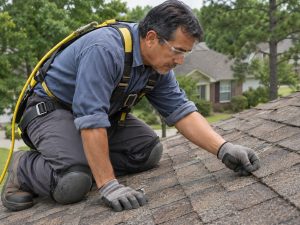
Many roof problems leave visible clues. An inspection can identify signs such as:
- Missing, cracked, or curling shingles
- Bare spots where shingle granules have worn off
- Lifted or loose flashing
- Cracked pipe boots
- Raised fasteners or shingles lifted by nail pops
- Visible sagging or uneven areas that may warrant a closer look at the decking
- Moss, algae, or debris buildup
- Water stains or darkened wood in accessible attic areas
Metal roofs have their own warning signs. On systems with exposed fasteners, loose screws and worn sealing washers deserve attention. Rust, shifted panels, and open seams can also point to problems. If you’re considering metal roof repair in Canton, GA, or Woodstock, identifying the panel system and the cause of the damage helps determine what repair makes sense.
Photos and Written Findings: What to Look For
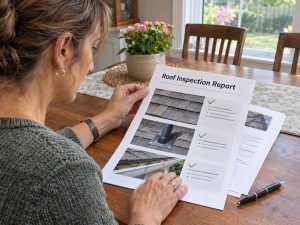
An inspection is more useful when you can understand the findings and see where each problem is. If a written report is included, look for:
- Clear photos: Close-ups show the defect, and wider views help locate it on the roof.
- Written notes: Each finding should say what was observed and where it was found.
- Priority levels: The report can distinguish urgent repairs from work to schedule later and conditions to monitor.
- Next steps: A useful report explains what needs repair, what can wait, and what may need further investigation.
A written record can help you plan repairs, set a budget, or share findings with a buyer or seller. Confirm whether photos and a written report are included when you arrange the inspection.
What a Visual Inspection Can See vs. What Needs Extra Testing
A standard visual inspection describes accessible conditions. Some problems hide under the roof covering or in areas the inspector can’t reach. Those may require separate testing or additional access.
What a Standard Inspection Can Find
- Visible damage to the roof surface
- Worn, broken, or loose seals and flashing
- Stains, visible sagging, and other signs of past or ongoing moisture
What May Need Separate Testing or Access
- Moisture readings or infrared scans: These methods can help identify suspect areas when suited to the roof. An infrared anomaly alone doesn’t confirm hidden moisture.
- Test openings or samples: In some cases, a qualified professional may recommend opening a small area to examine the layers below. This requires approval and a plan to restore the roof covering.
- Controlled water testing: When appropriate, a roofing professional can test small areas separately to help narrow down a leak’s entry point.
- Restricted areas: Spaces behind walls, beneath solar panels, or in inaccessible attics may need separate access arrangements.
If visible clues suggest a hidden problem, the findings should distinguish what was observed from what still needs confirmation. Before approving extra work, ask what the proposed test can establish, who will perform it, and what it will cost.
How This Is Different From an Insurance Claim
A roof inspection records the roof’s condition at the time of the visit. That’s useful whether or not you ever file a claim. The inspection findings alone don’t determine whether an insurer will cover the damage.
If storm damage is part of your situation, see our separate guide on Woodstock roof insurance claims. This post focuses on the inspection itself: what it can show, what a report can document, and where more information may be needed.
When Should You Schedule a Roof Inspection?
Woodstock’s hot summers, heavy rain, strong storms, and occasional hail can wear down a roof over time. Good times to consider an inspection include:
- Once a year as a practical starting point
- After a major storm with strong winds or hail
- Before you buy or sell a home
- As your roof ages or starts to show widespread wear
- When you notice a leak, ceiling stain, or missing shingles
Catching a loose shingle or failed flashing early can help prevent a small repair from turning into a larger one.
Ask Rise Residential Roofing About a Woodstock Roof Inspection
When arranging an inspection, ask which areas it covers, how access limitations will be noted, and whether photos or written findings are included. Mention any recent storms, ceiling stains, or previous repairs so the inspector knows where to look more closely.
Call Rise Residential Roofing at 678-772-6995 or contact us online to discuss a roof inspection in Woodstock, GA.
Frequently Asked Questions
How long does a roof inspection take?
The time depends on the roof’s size, shape, access, and the agreed scope. Many visual inspections can be completed in one visit, while additional testing may require more time or a separate appointment.
Do I need to be home during the inspection?
For an exterior-only inspection, you may not need to be home if access can be arranged. If the scope includes the attic or interior ceilings, arrange for someone to provide access. Confirm the details before the visit.
Will I get photos of the problems you find?
Photo documentation depends on the inspection scope. If you need photos, confirm that they’re included and ask whether the report will identify the location of each photographed issue.
Can a roof inspection find hidden leaks?
A visual inspection can find clues such as stains, damp wood, or damaged flashing. It may not identify the entry point or confirm moisture inside concealed layers. Additional access or testing may be needed to narrow down the cause.
Who does the extra testing, and does it cost more?
It depends on the test. Some methods need specialized equipment or a separate specialist and may cost extra. Confirm who will do the work, what it includes, and the price before approving it.
How often should I get my roof inspected in Woodstock, GA?
Once a year is a practical starting point for many homes. Consider an additional inspection after major wind or hail, or if you notice signs of a leak. Older roofs or roofs with recurring problems may need more frequent attention.
Do you inspect metal roofs, too?
A metal roof inspection may cover seams, flashing, corrosion, and exposed fasteners or sealing washers where applicable. Contact Rise Residential Roofing to confirm inspection availability for your specific metal roof system.