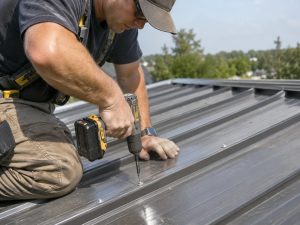
A metal roof can have years of service left when a screw backs out, a seam opens or flashing pulls away. These small defects can let water in long before the panels wear out. If the damage is isolated and the surrounding roof is sound, a spot repair can often solve the problem.
If you need metal roof repair in Woodstock, GA, this guide explains where leaks start, which repairs fit different problems and what to check afterward. Rise Residential Roofing serves Woodstock homeowners with roof leak repair and also offers metal roof repair in Canton, GA.
This guide covers repairs to the roof you already have. If you’re considering a new roof, see our residential metal roofing guide.
Common Metal Roof Problems
Fasteners, seams and flashing are good places to start when a metal roof shows signs of trouble.
Loose or Backed-Out Screws
Metal expands in the heat and contracts as it cools. Over time, that movement can contribute to loose fasteners on an exposed fastener roof. When a screw backs out, its washer may no longer seal the opening.
Worn Sealing Washers
The washers beneath exposed roofing screws help keep water out of the fastener holes. A cracked, distorted or missing washer can let water in even when the screw still feels tight.
Open Seams and Lifted Panel Edges
Wind damage or deteriorated sealant can leave openings at panel laps. Lifted edges near the eaves or ridge also deserve attention, especially after a storm.
Rust Spots, Scratches, and Small Holes
A scratch that exposes bare steel can lead to rust. Surface corrosion may be treatable, but a hole or badly thinned panel needs a closer look to determine whether a patch or replacement panel makes sense.
Damaged Flashing and Pipe Boots
Flashing directs water away from chimneys, walls, skylights and roof edges. Pipe boots seal around vent pipes. Bent flashing or a cracked boot can let water in even when the nearby panels are sound.
Repair Methods That Work With Metal Roofs
The repair should match the panel system and the part that failed. An exposed fastener roof may need new screws and washers, while a standing seam roof may need work at a panel joint or concealed attachment.
- Fasteners: A worn screw may need a compatible replacement with a new sealing washer. If the screw no longer grips, check the hole and the material beneath it before choosing a replacement.
- Seams: A failed lap may need cleaning and a compatible sealant or butyl tape, depending on how the joint is designed.
- Patches and panels: Some small holes can be repaired with a compatible metal patch. A severely corroded or deformed panel may need replacement. Avoid metal combinations that can accelerate corrosion.
- Flashing and pipe boots: Loose flashing may be secured again if it’s sound. Damaged flashing or a cracked boot may need replacement.
- Surface corrosion: Localized rust may be treatable with surface preparation and a compatible protective finish. A coating won’t restore metal that has rusted through.
A ceiling stain can be several feet from where water entered. Water can travel along a panel, the roof deck or a rafter before dripping indoors. Our guide to metal roof leak repair in Canton, GA explains why finding the entry point matters.
Drainage and Flashing Checks
A new screw or sealed seam may solve the immediate leak, but water can still back up if a valley or gutter is blocked. When evaluating a leak, it helps to check the drainage path around the damaged area:
- Valleys: Look for debris, corrosion or gaps where runoff from two slopes comes together.
- Low spots: Look for areas where water collects rather than draining.
- Gutters and downspouts: Check for clogs, loose attachments or signs that water has overflowed behind the gutter.
- Wall and chimney flashing: Check that the pieces are secure and overlap so water drains over the joint.
- Drip edges and eaves: Look for signs that runoff is reaching the fascia instead of draining clear of it.
When a Local Repair Isn’t Enough
A spot repair works best when the damage is limited and the surrounding roof is in good condition. A larger repair or replacement may be worth considering if:
- Corrosion, thinning or holes affect multiple panels.
- The decking under the panels is soft or rotted.
- Leaks keep appearing in different places.
- Panel overlaps or other details were installed incorrectly across a large area.
Ask which areas need work now, what a spot repair would leave unresolved and whether replacing a section would address the underlying problem. That makes it easier to compare a targeted repair with a larger project.
How to Check the Finished Work
Final checks should focus on the detail that failed. Replacement fasteners should sit squarely with their washers seated without being crushed. Repaired seams and flashing should be secure, and any metal shavings should be removed so they don’t rust and stain the surface.
For a hard-to-trace leak, a roofer may use a controlled water test when appropriate. If the attic is safely accessible, checking below the repair can help reveal fresh moisture. Before-and-after photos are useful for documenting work that’s hard to see from the ground.
Get Your Metal Roof Checked in Woodstock
If you notice rust, lifted trim, rattling panels or a new ceiling stain, a roof inspection can help determine whether the damage is isolated. Call Rise Residential Roofing at (678) 772-6995 or contact our team to discuss metal roof repair in Woodstock, GA.
Frequently Asked Questions
How do I know if my metal roof needs repair?
Watch for visible rust, raised screws, lifted panel edges or bent flashing. Indoors, look for new ceiling stains or signs of moisture in an accessible attic. Note what you can see from the ground or indoors and share it with your roofer.
Can you repair just one section of a metal roof?
Often, yes. An isolated fastener, seam or flashing problem may be repairable when the surrounding panels and decking are sound. The scope may grow if opening the area reveals hidden damage.
How often should metal roof screws be replaced?
There’s no fixed interval for every roof. Inspect exposed fasteners for screws that have backed out and for cracked, distorted or missing washers. Follow the maintenance guidance for your roof system.
Is metal roof repair cheaper than a new roof?
A targeted repair typically costs less than replacing the whole roof. Whether it’s the better value depends on how widespread the damage is and whether the rest of the roof is still sound.
Can you match the color of my existing metal panels?
A match depends on the availability of the panel profile, metal and finish. Even a panel in the original color can look different beside older panels that have faded.
How long does a metal roof repair take?
It depends on the extent of the damage, roof access, weather and the availability of matching parts. Replacing a few fasteners is a smaller job than removing panels to reach damaged decking.