Homeowners in Canton, GA may notice roof problems after storms, seasonal weather changes, or normal wear. A missing shingle, ceiling stain, or damaged roof component can be a reason to schedule roof repair, but the visible symptom does not always show the full extent or source of the problem. A professional assessment helps determine whether the issue is limited enough for a targeted repair or whether a broader roof evaluation is needed.
 Common Roof Repair Issues in Canton, GA
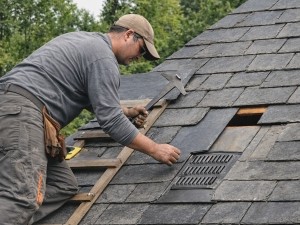
Some residential roof problems are localized, while others can involve several connected components. Missing or damaged shingles, flashing concerns, loose roofing materials, worn vent or pipe-boot components, granule loss, and debris impact are all conditions a contractor may evaluate during a repair visit.
Storm Damage and Missing Shingles
Wind and debris can loosen, crease, or remove shingles. The visible damage should be checked along with the surrounding roofing materials and the area beneath the affected section to determine the appropriate repair scope.
Flashing and Roof Penetrations
Flashing around chimneys, vents, skylights, and roof transitions can develop gaps or deterioration over time. Because water can travel before it becomes visible indoors, the location of a stain does not necessarily identify the exact entry point.
Loose Fasteners and Roofing Materials
Raised fasteners or loose shingles can create openings that need attention. The surrounding condition should be assessed before deciding whether a small repair is sufficient.
Vent and Pipe-Boot Damage
Roof penetrations are common places to check when moisture appears nearby. Cracked, worn, loose, or poorly sealed components may require repair or replacement depending on their condition.
 Granule Loss and Aging Shingles
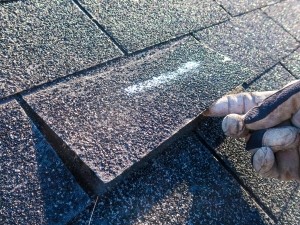
Granules in gutters or downspouts can be associated with normal shingle aging or more concentrated wear. A contractor can look at how widespread the condition is before deciding whether a localized repair makes sense.
What a Roof Repair Inspection Should Confirm
A ceiling stain, damp insulation, or visible roof damage is evidence that further evaluation may be needed, not a complete diagnosis by itself. The inspection should connect the symptom to observable roof conditions and determine how far the affected area extends.
| Symptom or Condition | Possible Area to Check | Inspection Evidence Needed |
|---|---|---|
| Ceiling or wall stain | Flashing, seams, or nearby penetrations | Moisture location and roof conditions traced to a likely entry area |
| Damp attic insulation | Roof deck, flashing, seams, or penetrations above | Extent of moisture and condition of nearby roofing components |
| Visible gap near a vent or penetration | Flashing, sealant, or surrounding shingles | Direct inspection of the penetration and adjacent materials |
| Granules in gutters or downspouts | Shingle surface | Whether wear is concentrated in one area or spread across larger roof sections |
| Missing or damaged shingles | Affected shingle courses and surrounding area | Condition of adjacent shingles and any visible underlying damage |
How a Roof Repair Quote Is Scoped
A useful written repair quote should identify the confirmed work area, the materials and labor included, and any known exclusions. It should also explain how conditions that are not visible until materials are removed will be handled if they change the repair scope. Homeowners should know what is included before work begins and how additional work would be discussed and approved.
If warranty information applies to the proposed repair, ask for the written terms that apply to that specific work. Coverage can vary by material, system, and scope, so it should not be assumed from a general roofing warranty statement.
Planning Access for Roof Repair
The contractor should plan access to the repair area, equipment staging, and protection for walkways, landscaping, gutters, vehicles, and other areas below or near the work zone. Homeowners do not need to climb onto the roof to help diagnose the problem. Ground-level observations, interior stains, photos taken from safe locations, and notes about when leaking occurred can still provide useful context for the contractor.
When a Localized Repair May Not Be Enough
A localized repair is most appropriate when the problem is limited and the surrounding roof remains serviceable. A broader assessment may be needed when damage appears across multiple sections, leaks recur in different places, deterioration is widespread, or the inspection finds concerns beyond the original repair area.
That broader assessment does not automatically mean the roof needs replacement. It gives the homeowner more information about the roof as a whole so repair and replacement options can be compared based on the actual conditions found.
Roof Repair in Canton, GA
Rise Residential Roofing serves homeowners in Canton, Holly Springs, Ball Ground, Waleska, Woodstock, and surrounding Cherokee County communities. If you notice a leak, damaged shingles, flashing concerns, or another roof problem, contact Rise Residential Roofing at 678-772-6995 to schedule an assessment and determine the appropriate repair scope.
Frequently Asked Questions
How can I tell whether a roof problem needs a localized repair?
The answer depends on what the inspection finds. A limited defect may be repairable, while damage across several areas or repeated leaks can justify a broader roof assessment.
Does a ceiling stain show exactly where the roof is leaking?
Not always. Water can travel before it becomes visible indoors, so the roof and nearby penetrations should be inspected before the source is identified.
What should a roof repair quote include?
It should describe the confirmed repair area, included materials and labor, known exclusions, and how newly discovered conditions would be handled if they change the scope.
Should I get on the roof before a contractor arrives?
No. You can document visible symptoms from safe locations and let the contractor handle roof access and close inspection.