A brown spot on the ceiling. A drip in the closet. A musty smell in the attic. These can be signs that moisture is getting into your home. The good news? Many localized roof leaks can be repaired, and early attention helps limit damage.
Contact Rise Residential Roofing for roof leak repair in Holly Springs, GA. A sound repair starts with locating the water entry point, addressing the damage and checking the surrounding roof components. Completion checks should suit the roof, the repair and site conditions.
Don’t wait for a small leak to turn into wet drywall or rotten wood. Call (678) 772-6995 to book a roof leak inspection today.
What Kinds of Roof Leaks Do We Fix?
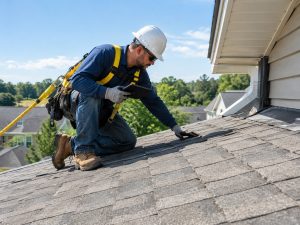
Roof leaks don’t just happen at random. Water finds a weak spot and slips in. Common problems to investigate in Holly Springs include:
- Missing or lifted shingles. Strong wind can tear shingles off or lift them. That leaves the underlying roofing layers more exposed to rain.
- Cracked pipe boots. The collar around a plumbing vent pipe can deteriorate with age and exposure. Cracks or separated connections can allow water into the roof assembly.
- Loose or rusted flashing. Flashing helps direct water away from chimneys, walls and skylights. If it pulls away, corrodes or is improperly detailed, water can get behind it.
- Worn-out sealant. Caulk and roof sealant don’t last forever. Old sealant can shrink, crack or lose adhesion.
- Nail pops. Raised fasteners can lift or damage shingles and create potential water entry points.
- Worn valleys. Valleys are where two roof slopes meet. They carry concentrated water flow, so damage or poor detailing there deserves attention.
- Leaky metal roof screws and seams. On metal roofs, fastener washers can deteriorate and panel connections can develop gaps.
If you see stains, drips or damp insulation, an inspection can help determine whether roofing, plumbing, condensation or another source is responsible.
How Do Roofers Find the Source of a Roof Leak?
Here’s something many people don’t know. The wet spot on your ceiling is often not directly beneath the entry point. Water can run along a board or pipe before it drips down.
Where access is safe and available, an attic inspection can reveal wet wood, stains and other clues. The corresponding roof area then needs assessment, along with nearby flashing, penetrations and drainage details. If the source remains unclear, controlled water testing may help under suitable conditions. One person applies water to a limited area while another monitors the accessible interior. The results help narrow the investigation, but do not always identify every leak path.
The appropriate inspection steps depend on the home, access and conditions. For information about nearby properties, see our roof leak repair in Canton, GA article.
Repair Methods That Match Your Roof
Every roof is different, so the repair should match the materials already on your roof. Here are common approaches, subject to the roof’s condition and the manufacturer’s requirements:
Cracked pipe bootRepair or replace the boot or flashing assembly using a detail compatible with the pipe and roof system.Loose flashingRepair or replace flashing and restore proper fastening, overlaps and water-shedding details.Worn sealantRemove failed sealant, prepare the surface and apply a compatible product where the roof detail requires sealant.Worn valleyRepair or replace affected valley materials, underlayment and adjacent roofing as required by the assembly.
| Problem | Typical repair approach |
|---|---|
| Missing or lifted shingles | Replace damaged shingles with compatible products and secure them according to the manufacturer’s instructions. |
| Cracked pipe boot | Repair or replace the boot or flashing assembly using a detail compatible with the pipe and roof system. |
| Loose flashing | Repair or replace flashing and restore proper fastening, overlaps and water-shedding details. |
| Worn sealant | Remove failed sealant, prepare the surface and apply a compatible product where the roof detail requires sealant. |
| Nail pops | Address the raised fastener and its cause, repair affected roofing and restore fastening according to the roof system’s requirements. |
| Worn valley | Repair or replace affected valley materials, underlayment and adjacent roofing as required by the assembly. |
Metal roofs need methods that account for panel movement as temperatures change. Tar or caulk alone does not correct every fastening or seam problem. Repairs may involve compatible replacement fasteners and washers, seam repairs or corrections to panel laps. You can learn more in our blog about metal roof leak repair in Canton, GA.
Drainage and Flashing Checks
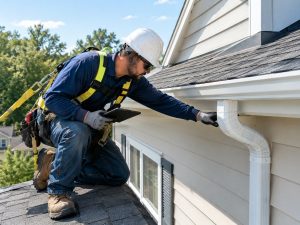
A leak can be a sign that water isn’t leaving your roof the way it should. Alongside the damaged area, the assessment should consider how water moves off your home.
Drainage checks:
- Are the gutters clogged with leaves or pine straw?
- Do the gutters slope toward the downspouts?
- Is water spilling over the edge and soaking the fascia boards?
- Do the downspouts carry water away from the house?
Flashing checks:
- Is the chimney flashing properly integrated and securely installed?
- Is the step flashing along the walls in place?
- Is the drip edge secure and correctly integrated with the roofing layers?
- Are skylights and vents properly flashed, with required seals in good condition?
When gutters back up, water can collect at the roof edge and contribute to intrusion beneath roofing materials. Fixing a leak without addressing a related drainage problem is like mopping the floor while the sink is still running.
Roof Repair vs. Roof Replacement: When is a Patch Not Enough?
A spot repair is a good choice when damage is localized and the rest of your roof remains serviceable. But it can’t fix everything. A broader assessment may be needed when:
- The roof is aging and leaks keep appearing in different places.
- Shingles are curling, cracking or losing substantial granules across the roof.
- The decking is deteriorated or the roof shows sagging.
- Water damage affects a large part of the roof assembly.
- A storm has caused extensive damage.
These conditions do not automatically mean the entire roof needs replacement. Findings should explain the extent of the damage, the limits of repair and the available options. Photos can help support that discussion where included in the assessment.
How We Check the Finished Work
Before repairs begin, confirm how the completed work will be checked. Appropriate checks depend on the repair, access and weather conditions:
- Water testing. Controlled testing may help evaluate a repair where suitable. No visible drip during a limited test does not guarantee performance under every storm condition.
- Attic review. Where accessible, the area beneath the leak can be checked for signs of continuing water entry. Previously wet wood or insulation may remain damp after the entry point has been repaired and may need separate attention.
- Installation review. New shingles, flashing and boots should be checked against the applicable installation and repair details.
- Photos. Before-and-after pictures can document the work. Confirm whether they are included.
- Cleanup. The agreed scope should address removal of old materials and fasteners. Magnetic tools can help collect accessible ferrous nails, but do not guarantee that every fastener has been recovered.
After the next heavy rain, check accessible interior areas for fresh dampness or new staining. If you notice continuing water entry, contact the contractor promptly.
Why Holly Springs Homeowners Call Rise Residential Roofing
When discussing roof leak repair with Rise Residential Roofing, focus on the details that help you understand the proposed work:
- The evidence identifying the likely source of the leak
- Repair materials compatible with your roof
- A clear explanation of the findings
- A written scope and price, including how additional damage will be handled
- Completion checks appropriate to the repair
A small leak left unresolved can lead to moisture damage, decay and a larger repair bill. Call Rise Residential Roofing at (678) 772-6995 to schedule a roof leak inspection in Holly Springs, GA and discuss your repair options.
FAQ
1. How do I know if my roof is leaking?
Look for ceiling stains, peeling paint, drips or a musty smell. Wet wood or damp insulation in accessible attic areas can also indicate moisture problems. These signs need investigation because plumbing and condensation can cause similar symptoms. Avoid entering unsafe attic areas.
2. How much does roof leak repair cost in Holly Springs, GA?
The cost depends on the source, extent of damage, access and required materials. An isolated pipe-boot repair may involve less work than rebuilding a damaged valley. Request an assessment and written estimate that explains the repair scope and how concealed damage would be handled.
3. How long does a roof leak repair take?
A small, accessible repair may take a few hours, while more extensive flashing, decking or valley work can take longer. Weather, material availability and hidden damage also affect the schedule. Confirm the expected duration after assessment.
4. Can you fix a leak while it’s raining?
Rain and wet surfaces can make roof access unsafe and prevent some repair materials from bonding properly. A qualified contractor may recommend temporary protection when it can be installed safely. Ask about availability and suitable options; a permanent repair may need to wait for appropriate conditions.
5. Do you repair leaks on metal roofs?
For a metal roof, confirm that the proposed service covers your panel and fastening system. Metal-roof leak repairs may involve fasteners, washers, seams or panel overlaps, using materials and details that accommodate movement.
6. Should I repair my roof or replace it?
If the roof is otherwise serviceable and damage is isolated, repair may be appropriate. Widespread deterioration or recurring leaks calls for a broader assessment. Roof age alone does not decide the answer; the cause, extent of damage and remaining condition matter.