A metal roof can have years of service left even when a screw backs out, a seam opens or flashing pulls away. Those small defects can let water in long before the panels wear out. If the damage is limited and the surrounding roof is sound, a targeted repair may be all you need.
If you need metal roof repair in Holly Springs, GA, this guide explains where leaks start, what repairs fit different roof systems and how to check the finished work. Rise Residential Roofing also provides metal roof repair in Canton, GA. Call (678) 772-6995 to discuss your roof and schedule an inspection.
Common Metal Roof Problems
When a metal roof leaks, fasteners, seams and flashing are good places to start looking. Common problems include:
- Loose screws: On roofs with exposed fasteners, screws can loosen over time and leave gaps at the panel.
- Worn sealing washers: A cracked, distorted or missing washer can let water enter around a screw.
- Open seams: Lifted or damaged panel joints can let rain in, especially where wind pushes water across the roof.
- Corrosion: Rust can develop where a protective finish is damaged or where incompatible metals come into contact.
- Damaged flashing: Loose or bent flashing can open a path for water around chimneys, walls and skylights.
- Cracked pipe boots: A split collar or failed seal around a vent pipe can leak even when the surrounding panel is sound.
- Storm damage: Hail can dent panels, while strong winds can lift edges or loosen trim. A dent alone doesn’t tell you whether the roof leaks.
Repair Methods That Match Your Roof
An exposed fastener roof needs different repairs than a standing seam roof, which typically uses concealed clips or fasteners. Identifying the panel system helps narrow down what failed and which parts will fit.
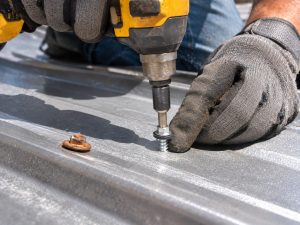
On an exposed fastener roof, a loose or worn screw may need a compatible replacement with a new sealing washer. If the screw no longer grips, the roofer should check the hole and the material beneath it before choosing a replacement. A larger screw won’t solve the problem if the backing is damaged.
On a standing seam roof, the repair depends on the panel profile and how the seam was formed. An isolated opening may need a system-specific seam repair. A damaged clip or deformed panel may require removing part of the roof to reach the problem.
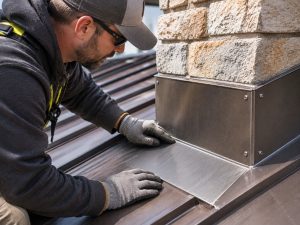
Use fasteners, flashing and sealants compatible with the existing metal and finish. A surface patch can hide a damaged joint without restoring the way it sheds water. If a panel has a hole or severe corrosion, replacing the affected panel may be a better option.
Drainage and Flashing Checks
Water can travel along a panel or rafter before it drips indoors. A ceiling stain helps narrow the search, but the entry point may be several feet away. Checking how water moves across the roof can help explain why the leak appeared where it did.
- Look for debris collecting in valleys or behind chimneys.
- Check for signs of water backing up at gutters, downspouts and roof edges.
- Look for gaps or loose flashing at walls, chimneys, skylights and ridge caps.
- Check sealant for cracks, shrinkage or separation where the roof detail relies on it.
- Look for low spots or other areas where water collects instead of draining.
For more on finding the entry point before choosing a repair, see our guide to metal roof leak repair in Canton, GA.
When a Small Repair Is Not Enough
A spot repair makes sense when the problem is isolated and the surrounding roof is in good condition. A larger repair or replacement may be worth considering when:
- Corrosion has spread across several panels.
- Fasteners and washers are failing in multiple areas.
- The wood decking beneath the metal is soft or deteriorated.
- The same area keeps leaking after previous repairs.
- Several parts of the roof system are deteriorating at once.
The next step depends on how far the damage extends. Replacing one panel or rebuilding a section of flashing may be enough. If the decking is damaged or failures are widespread, ask how much of the roof needs to be opened and what each repair or replacement option would address.
How to Check the Finished Work
The final check should match the defect that caused the leak. On an exposed fastener repair, look for properly seated screws and washers. At a seam or flashing repair, check that the joint is secure, any required sealant covers the intended area, and water has a clear path past the detail.
For a hard-to-trace leak, a roofer may use a controlled water test when conditions allow. If the attic is accessible, checking the area beneath the repair can help reveal fresh moisture. Before-and-after photos are useful for documenting what changed, especially when the repair is difficult to see from the ground.
After the next heavy rain, check the original stain or drip location from inside the home. If you see fresh moisture, note where it appeared and when, then contact your roofer.
Schedule Metal Roof Repair in Holly Springs, GA
Hot summers and heavy storms can expose weak points in metal roof fasteners, seams and seals. If you’ve noticed new stains, loose trim or rust, an inspection can help you decide whether the roof needs a spot repair or a larger fix.
Call Rise Residential Roofing at (678) 772-6995 or contact our team to schedule a metal roof inspection in Holly Springs, GA.
Frequently Asked Questions
How do I know if my metal roof needs repair?
Look for new ceiling stains, visible rust, lifted trim or loose fasteners. You don’t need to climb onto the roof to confirm the cause. Note what you can see from the ground or inside the home and share it with your roofer.
Can a leaking metal roof be repaired instead of replaced?
Often, yes. An isolated leak at a fastener, seam or flashing may be repairable when the rest of the roof is sound. Widespread corrosion or damaged decking can require more extensive work.
How long does a metal roof repair take?
It depends on the location and extent of the damage, the roof’s accessibility, the availability of matching parts and the weather. Replacing a few fasteners is a different job from opening a section to replace panels or repair decking.
Is it okay to seal a metal roof leak with tar?
Avoid using roofing tar as a general patch. It can cover up the entry point without fixing the failed detail. Where a sealant is needed, use one that’s compatible with the metal, finish and joint.
How often should I have my metal roof checked?
A yearly inspection is a practical starting point. Schedule an additional check after significant hail or strong winds, or when you notice new signs of a leak. Follow any inspection schedule specified by your roof manufacturer or warranty.
Can exposed fastener and standing seam roofs both be repaired?
Yes, when the damage and panel condition allow it. Exposed fastener repairs often focus on screws and washers, while standing seam repairs may involve the panel joint or concealed attachment. Identifying your roof system comes before choosing the repair.