A metal roof can be a worthwhile investment for a Woodstock homeowner. A properly selected and installed system can provide durable protection against heat, heavy rain and wind. But the panels are only part of the story. How the roof is installed affects how well it performs and how long it lasts.
This guide explains what goes into a proper metal roof installation in Woodstock, GA. We’ll cover panel types, fasteners, underlayment, flashing, and how metal moves with the weather. The same system considerations apply to metal roof installation in Canton, GA. To discuss your project and an estimate, call Rise Residential Roofing at (678) 772-6995.
A Metal Roof Is a System, Not Just Sheets of Metal
Many people think a metal roof is just panels screwed to the house. It’s much more than that. A metal roof has several parts that work as a team:
- Panels: The metal sheets you see from the street
- Fasteners or clips: What holds the panels in place
- Underlayment: A protective layer beneath the metal where required by the assembly
- Flashing and trim: Components that direct water away from edges, joints and penetrations
If one part is installed incorrectly, the roof can leak. Let’s look at each one.
Exposed vs. Concealed Fasteners: The Biggest Choice You’ll Make
Two common metal roofing options differ in how the panels are held down.
Exposed Fastener Panels
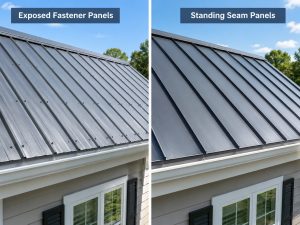
With this type, screws pass through the panel face. Suitable roofing screws commonly use sealing washers to help keep water out of the fastener holes. The screw heads remain visible on the roof surface.
These systems often have a lower initial cost than standing seam systems. Exposed fasteners and washers need periodic inspection because weathering, movement and installation problems can affect their seals. Some components may need replacement over time.
Concealed Fastener Panels (Standing Seam)
Standing seam panels have raised seams. Many systems use clips concealed beneath the seams, while others use a concealed fastening flange. The attachment method depends on the selected product.
Concealed fastening reduces exposed fastener penetrations across the main panel surface and provides a clean appearance. Standing seam systems often cost more and require installation experience with the selected panel system. Their long-term performance still depends on correct detailing and maintenance.
How the Panels Attach to Your Roof
Before metal goes on, the supporting deck or structure must meet the selected system’s requirements. Damaged or deteriorated decking needs to be addressed first. Panels cannot be reliably secured to an unsuitable base.
Standing seam systems that use clips may specify fixed clips, floating clips or other attachment details:
- Fixed clips: Provide restraint according to the system’s design.
- Floating clips: Allow specified movement as panels heat and cool.
Clip selection depends on the panel system, panel length and manufacturer’s requirements. Fastener and clip spacing must also suit the substrate and project wind-load requirements.
Thermal Movement: Why Metal Needs Room to Move
Metal expands when it gets hot and contracts when it cools. The roof’s attachment and flashing details need to account for that movement.
On a sunny Woodstock afternoon, a metal roof can become much hotter than the air. It cools as conditions change. Longer panels generally undergo more total movement than shorter panels of the same material under the same temperature change.
If movement is improperly restrained, fasteners and connections can be stressed. Panels may also develop visible waviness called oil canning, though this appearance has several possible causes and does not by itself establish a leak or installation failure.
Manufacturers specify attachment details, permitted panel lengths and movement provisions for their systems. Following those requirements supports performance and helps avoid problems with warranty coverage.
These requirements matter whether the project is in Woodstock or involves metal roof installation in Cartersville, GA.
Underlayment: The Layer You Never See
In many residential assemblies, underlayment sits between the roof deck and the metal panels. It provides secondary protection against water that gets beneath the primary roof covering.
Metal roofing can reach high temperatures, so the underlayment must be suitable for the selected assembly and expected exposure. Some systems require high-temperature-rated products. Additional self-adhered membrane may be specified at valleys, edges or penetrations, depending on the design and applicable requirements.
Use underlayment approved for the selected roof system. Incompatible products or incorrect installation can affect performance and warranty coverage.
Flashing: Where Most Leaks Begin
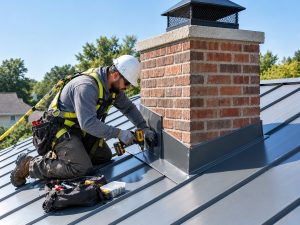
Flashing directs water away from roof joints and transitions. You’ll find it around chimneys, skylights, vents, walls and valleys, as well as at ridges and edges.
These details are important leak investigation points. Flashing should fit the roof geometry and accommodate movement where required. Sealant alone does not replace properly designed flashing.
Vent pipes need flashing or boots compatible with the roof and penetration. Closures, sealants and ventilation details at ridges and eaves should follow the panel system’s requirements to help manage weather entry and pests without blocking required airflow.
Why Hire a Local Pro for Your Woodstock Metal Roof
Metal roofing leaves little room for poor detailing. An unsuitable clip or incorrect flashing connection can create problems later. Look for a contractor familiar with the selected panel system and the project’s weather exposure.
When discussing a project with Rise Residential Roofing, compare exposed-fastener and standing seam options for your home and budget. The proposal should identify the panel system, attachment method, underlayment, flashing details and applicable manufacturer requirements.
Ready to get started? Call Rise Residential Roofing at (678) 772-6995 to discuss a roof assessment and estimate in Woodstock, GA.
Frequently Asked Questions
1. How long does a metal roof last in Woodstock, GA?
A metal roof can provide decades of service. Actual life depends on the metal, finish, roof design, installation, exposure and maintenance. A warranty term is not a guarantee of service life.
2. Is standing seam worth the extra cost?
It can be, depending on your priorities. Concealed fastening reduces exposed fastener penetrations across the main panel surface and offers a clean appearance. Compare the specific systems, installation requirements, maintenance needs and total cost.
3. Can a metal roof go over my old shingles?
Sometimes, if applicable requirements and the selected roof system permit it. Existing roof condition, attachment, moisture and loading must be evaluated. Removing the old roof allows the deck to be inspected more directly and damaged areas addressed.
4. Is a metal roof loud when it rains?
Rain noise depends on the full roof assembly. A solid deck, insulation and interior finishes influence sound transmission. Metal over an occupied home’s insulated roof assembly sounds different from metal installed over open framing.
5. How long does a metal roof installation take?
Timing depends on roof size, complexity, tear-off, deck repairs, panel preparation, access and weather. Ask for a project-specific schedule after the roof has been assessed.
6. Will a metal roof help lower my energy bills?
It may. Products with suitable reflective finishes can reduce solar heat gain. Any effect on cooling costs depends on the product, insulation, attic design, climate and the rest of the building.