
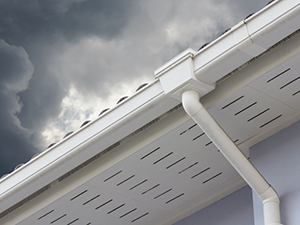
Gutters in Canton, GA should be selected around the way a specific home collects and moves rainwater, not from a one-size recommendation. Roof area and pitch, valleys, downspout placement, discharge routing, supports, joints, and maintenance access all affect how well the system performs. Rise Residential Roofing provides residential gutter services in Canton and the surrounding North Georgia area. Call (678) 772-6995 to discuss the drainage needs of your home.
Start With the Roof and Drainage Path
A gutter assessment should begin above the gutter itself. The contractor should look at which roof sections drain into each run, where valleys concentrate runoff, how long each gutter section is, where downspouts can be placed, and where those downspouts can discharge water safely. Rise Residential Roofing’s Canton gutter installation guide provides additional context on system layout, alignment, and installation.
The goal is not to apply a generic gutter size to every house. Ask for a site-specific sizing rationale that explains how the recommended gutter dimensions, outlet locations, and downspout arrangement fit the roof and local design conditions. That explanation should be based on the actual home rather than an unsupported rainfall or capacity figure.
What a Building-and-Drainage Assessment Should Cover
| Assessment Area | What to Confirm |
|---|---|
| Roof catchment | Which roof sections, pitches, and valleys feed each gutter run and where runoff becomes concentrated. |
| Downspout placement | Whether the number and locations of outlets support the roof layout, gutter runs, and available discharge paths. |
| Discharge routing | Where water will leave each downspout and whether it is directed away from the home without creating a new drainage problem. |
| Joints | How many field joints the system will have and where connections or end conditions need sealing and future inspection. |
| Supports | Whether the attachment method and support layout suit the fascia, gutter profile, roof edge, and expected service conditions. |
| Maintenance access | How gutters, outlets, and downspouts can be inspected and serviced without relying on difficult or unsafe access. |
Compare Sectional and Seamless Aluminum Gutters
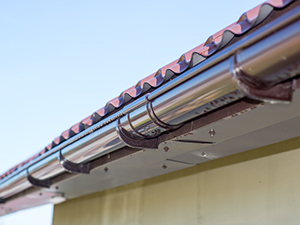
Rise Residential Roofing currently discusses aluminum gutters in both sectional and seamless configurations. The important difference is how the runs are assembled. Sectional gutters use multiple pieces joined along the roofline. Seamless gutters are formed in longer continuous runs, which reduces the number of field joints along straight sections.
| Feature | Sectional Aluminum | Seamless Aluminum |
|---|---|---|
| Construction | Individual lengths are joined during installation. | Long runs are formed to fit the measured roof edge. |
| Field joints | More connections along the gutter run. | Fewer connections along straight runs. |
| Service considerations | Individual sections may be easier to isolate when one area is damaged. | Fewer field joints can reduce the number of connection points that need monitoring. |
| Selection | Suitability depends on the home, layout, condition, and project scope. | Suitability still depends on sizing, outlets, supports, discharge, and maintenance needs. |
Neither style is maintenance-free. Leaves, roof debris, outlets, downspouts, hangers, and discharge areas still need periodic attention. If debris control is part of the project, Rise Residential Roofing’s Canton gutter guard guide explains why guard performance also depends on roof design, debris type, and ongoing inspection.
Check Supports, Fascia, and Roof-Edge Conditions
A new gutter system needs a sound attachment surface. The contractor should check visible fascia condition and determine whether damaged areas need correction before gutters are secured. A gutter that is well sized but attached to deteriorated fascia can still sag, move, or lose its intended drainage slope.
Support spacing and fastening should follow the selected system and site conditions rather than a universal rule stated without context. The proposal should identify any fascia repair, unusual roof-edge condition, or access issue that is outside the basic gutter scope.
Plan Where the Water Goes After the Downspout
Moving water off the roof is only part of the job. Downspout discharge should be planned so runoff is not simply concentrated beside the foundation, across a walkway, or into an area that already drains poorly. Extensions, surface routing, or connections to an approved drainage system may be considered depending on the property.
Poor drainage can contribute to erosion, persistent moisture around exterior surfaces, and water-related problems near the home. Those effects depend on grading, soil, foundation details, and site drainage, so the gutter contractor should not promise that one gutter change will correct every moisture or foundation concern.
Know When the Existing System Needs Repair Instead
Choosing a gutter system is different from deciding whether the existing gutters need repair or replacement. If the current system has isolated loose supports, a limited leak, or a local downspout problem, repair may still be appropriate. Rise Residential Roofing’s Canton gutter repair guide addresses that separate condition-based decision.
Gutters in Canton, GA
A useful gutter proposal should explain how the system fits the roof catchment, where downspouts will be placed, how runoff will be discharged, what aluminum configuration is proposed, and how supports and maintenance access will be handled. For gutters in Canton, GA, call Rise Residential Roofing at (678) 772-6995 to discuss a site-specific assessment.
Frequently Asked Questions
How should a contractor decide what gutter system fits my home?
The recommendation should consider roof catchment, pitch, valleys, gutter runs, downspout placement, discharge routing, supports, and maintenance access rather than relying on one standard size for every home.
What is the main difference between sectional and seamless aluminum gutters?
Sectional systems use multiple joined pieces, while seamless systems use longer continuous runs with fewer field joints along straight sections.
Do seamless gutters eliminate maintenance?
No. They still need inspection and service for debris, outlets, downspouts, supports, and discharge conditions even though they have fewer field joints.
Should gutter discharge be part of the installation plan?
Yes. The proposal should explain where downspouts release water and how the discharge path avoids creating drainage problems near the home or common-use areas.